
Resources for Informed, Confident Advocacy
Practical guidance to help families ask better questions, understand care, and prepare for important conversations.
Knowledge Helps Families Advocate With Confidence
The right information brings clarity and empowers you to speak up for your loved one.
Use these tools to prepare, evaluate care, and stay involved every step of the way.
Explore Your Topic



Trusted Community & Government Resources
-
Medicare Care Compare
Search and compare Medicare-certified nursing homes, hospitals, hospice programs, home-health agencies, physicians, dialysis facilities, and other providers.
Online: www.medicare.gov/care-compare/
Medicare
Questions about Medicare coverage, claims, appeals, notices, complaints, and covered services. Medicare can also explain how to appoint a representative.
Call: 1-800-MEDICARE (1-800-633-4227); TTY 1-877-486-2048
Online: www.medicare.gov/
-
Florida Agency for Health Care Administration (AHCA)
Licenses and regulates many Florida healthcare facilities and investigates consumer complaints involving regulated providers and facility conditions.
Call: 1-888-419-3456
Online: apps.ahca.myflorida.com/hcfc/
For facility comparisons and inspection information, use FloridaHealthFinder.
-
Florida Long-Term Care Ombudsman Program
Free, confidential advocacy for residents of nursing homes, assisted living facilities, and adult family care homes. The program receives and investigates complaints made by or on behalf of residents.
Call: 1-888-831-0404
Online: ombudsman.elderaffairs.org/file-a-complaint/ription text goes here
-
Eldercare Locator
A public service of the U.S. Administration for Community Living that connects older adults and families with local aging services nationwide.
Call: Call or text 1-800-677-1116
Online: eldercare.acl.gov/home
ElderSource - Area Agency on Aging & ADRC
The state-designated Aging and Disability Resource Center serving Volusia and Flagler Counties. Connects older adults, adults with disabilities, and caregivers to local programs and supports.
Call: 1-888-242-4464; Florida Relay 711
Online: myeldersource.org/get-help/elder-helpline/
HelpLine hours listed by ElderSource: Monday-Friday, 8 a.m.-5 p.m.
Frequently Asked Questions
-
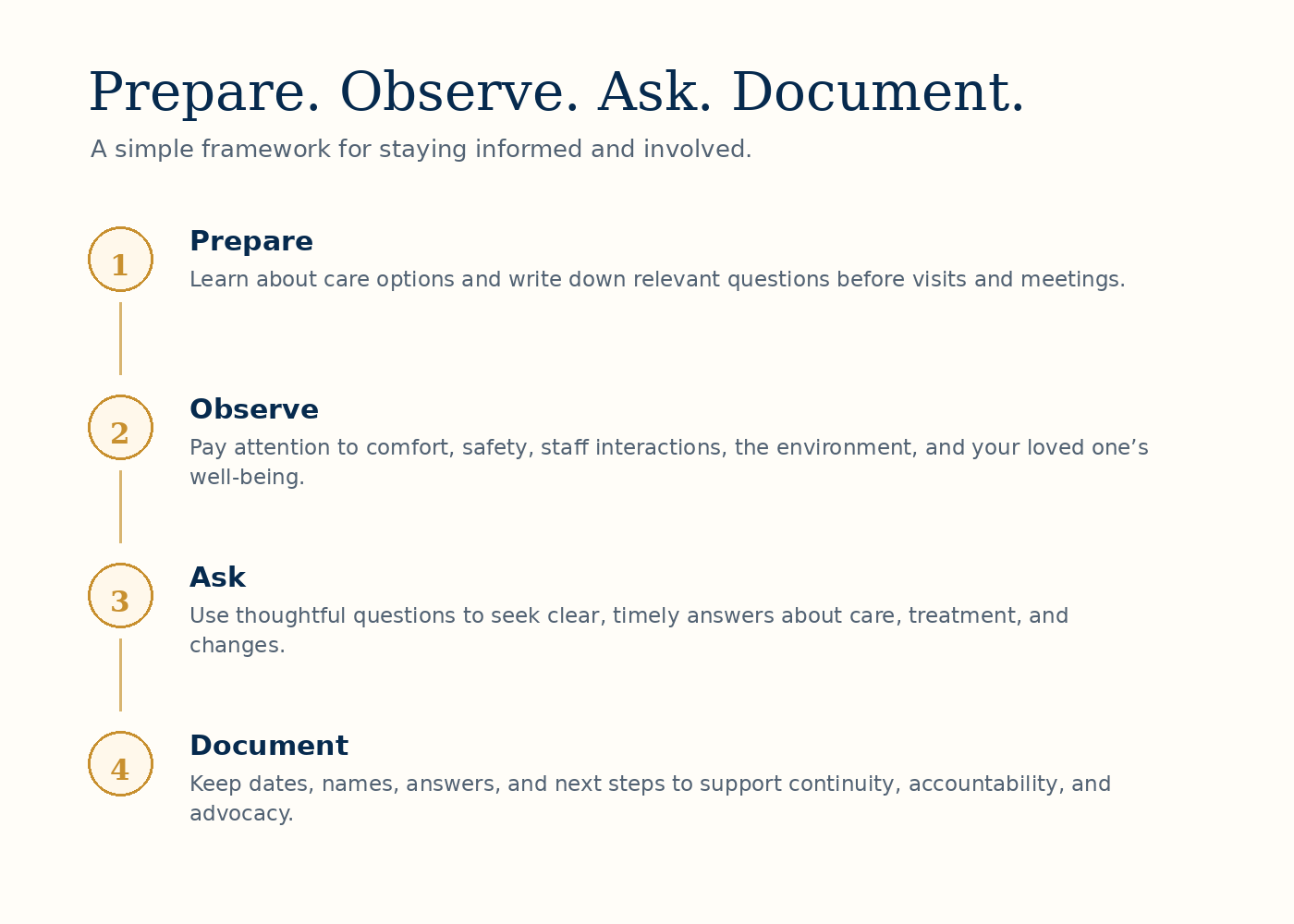
Review the most recent update and decide what you most need to understand. A short written list helps you stay focused and avoids relying on memory. Confirm visiting hours, infection-control requirements, and whether you need to arrange a conversation with nursing, therapy, dietary, social services, or another team member.
Note recent changes in condition, falls, wounds, appetite, weight, mood, sleep, pain, mobility, medications, therapy, or hospital visits.
Write your three highest-priority questions.
Bring eyeglasses, hearing devices, or communication aids your loved one needs, if appropriate.
Plan to observe first and ask questions calmly and privately.
-
Bring only what will help you verify information or support your loved one. Protect private health and financial information while traveling.
A current medication list and known allergies, if available.
A notebook or visit log with dates, names, observations, and promised follow-up.
Relevant discharge instructions, appointment summaries, or prior questions.
Copies of healthcare surrogate, power-of-attorney, guardianship, or release documents when applicable.
Comfort items or properly labeled personal belongings permitted by the facility.
-
Look at the whole picture rather than one isolated detail. Compare what you see with your loved one's usual condition and care plan. Ask the resident how they feel and what matters to them.
Alertness, breathing, pain, mood, communication, and new confusion.
Skin condition, hygiene, clothing, positioning, mobility, and assistive devices.
Food and fluid access, meal assistance, swallowing precautions, and weight concerns.
Room safety, call-light access, cleanliness, personal belongings, and dignity/privacy.
Whether ordered supports appear available, such as oxygen, off-loading devices, braces, alarms, or therapy equipment.